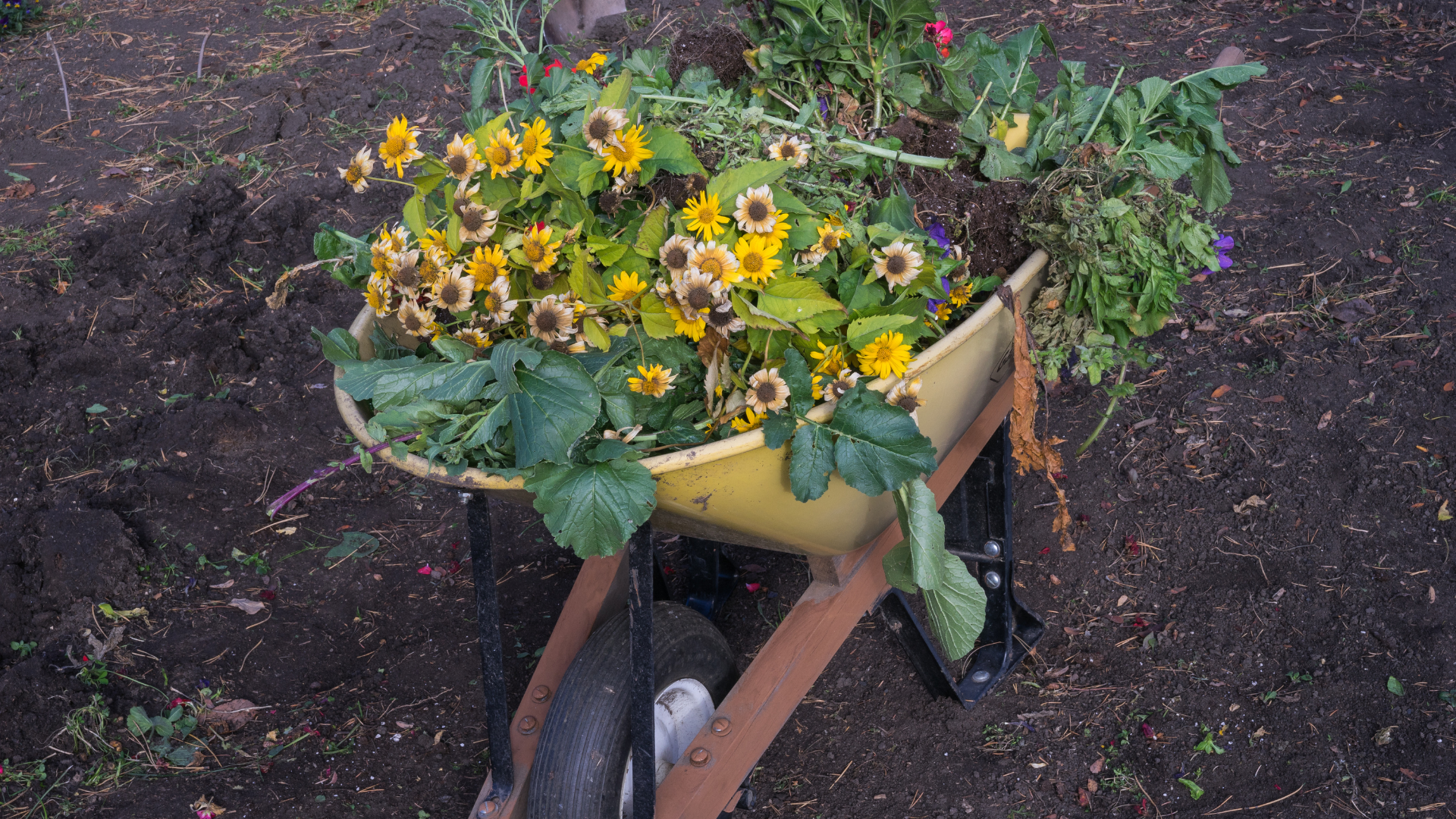
Most of us have plants that are getting too big for their space. Dividing perennials decreases their space in the garden, giving other plants a chance. It also gives us new plants for friends and neighbors.
But what should be divided in late summer or early fall? And what should only be divided in spring? The answer lies in the time of flowering.

The How, When, What, and Why of Plant Division.
Dividing perennial plants is one of the most reliable, cost‑effective, and transformative practices in gardening. Division is a technique that gives you more plants, healthier growth, and a rejuvenated landscape without spending a dime.
Even though plant division is very common, most of us are unclear about when to divide, how to divide, and which plants benefit most from the process. This is a summary of three excellent articles from Horticulture Magazine that explain the how, when, what, and why of plant division. Links to the articles summarized are at the end.

Why Put Forth the Effort of Dividing Perennials?
At its core, division is simple: you take one mature plant and split it into two or more smaller plants, each with its own roots and shoots. But as Beyers explains, the simplicity of the technique hides its importance. Many perennials must be divided periodically to maintain vigor.
Plants such as daylilies, phlox, lamb’s ears, asters, and black‑eyed Susans naturally expand outward over time. Without division, they become overcrowded, lose vigor, or even die out completely. Some species, like yarrow and asters, are short‑lived and will disappear if not divided every couple of years. Division is not just a propagation method; it’s a maintenance requirement.

When Do You Divide Which Plants
One of the most important principles in perennial division is timing, and Beyers provides a clear rule: divide plants in the season opposite their bloom time. Spring and early‑summer bloomers should be divided in late summer or early fall, while late‑summer and fall bloomers should be divided in early spring. This means don’t divide your hostas in fall while their leaves are beautiful. This sets them back for the next spring.
Proper timing ensures that plants are not stressed during their lowering period and can instead focus their energy on root establishment. For example, dividing a spring bloomer like forget‑me‑not right before it flowers will sacrifice that season’s blooms. Dividing it in late summer allows it to rest, rebuild, and return strong the following spring. Conversely, fall bloomers such as ornamental grasses should be divided in spring, giving them the entire growing season to recover.
At the end of this article is a list of the common garden plants in Michigan that can be divided in Late Summer – Early Fall.

Success in Plant Division Lies in the Technique
Meghan Shinn’s article on late‑summer and fall plant division adds an important nuance: size matters. In fall, divisions should be larger because plants have less time to establish before winter. A plant that might yield five small divisions in spring should instead be split into two or three substantial pieces in fall. These larger divisions have more stored energy and more robust root systems, giving them a better chance of surviving winter and thriving the following year. This is especially important here in Michigan, where winters are unpredictable, and our freeze-thaw cycles are hard on plant roots.
The technique of division is straightforward but benefits from careful execution. Beyers outlines a step‑by‑step process:
1. Water the plant ahead of time to hydrate roots and loosen soil.
2. Dig a full circle around the plant
3. Lift the entire clump
4. Slice it into sections using a spade, pruners, or even a small saw for woody roots. Each division must include healthy roots and shoots.
5. Plant the clones
I would add to this list: completely remove the old soil from the plant roots so you can see any damage. This is also the time to prune off any dead, diseased, or decaying roots.
Also remove any dead or dying vegetation. Leave enough leaf surface for photosynthesis. But too much above-ground leaf mass (especially buds) will stress your plant, and it won’t develop a strong root system.
Replant with compost soil mix and water thoroughly. Once replanted, divisions should be treated like new plants: watered consistently, mulched, and monitored for several weeks.
Shinn emphasizes the importance of aftercare, particularly for fall divisions. Newly divided plants should be spaced appropriately, planted at the same depth as the original plant, and watered deeply and regularly.
Even drought‑tolerant plants need consistent moisture after division. If autumn weather is still hot and sunny, provide temporary shade using a simple tent made from stakes and newspaper, a sheet, or shade cloth. This protects tender divisions from heat stress and reduces transplant shock.
These small steps dramatically increase the success rate of fall division.

Which Plants Actually Need Dividing, Which Do You Leave Alone?
Knowing when a plant needs division is just as important as knowing how to divide it. In “Signs That a Perennial Plant Needs Dividing,” Shinn identifies three clear indicators.
- A plant may simply outgrow its space, crowding neighbors or spilling into pathways. Division restores order and gives each plant room to grow.
- A plant may develop a “doughnut” shape—a dead center surrounded by a ring of healthy growth. This is a classic sign of aging in many clump‑forming perennials, including iris and ornamental grasses. The solution is to dig up the plant, discard the dead center, and replant the healthy outer portions.
- A plant may bloom less than in previous years. While reduced flowering can result from increased shade, it often indicates that the plant is declining and needs division to rejuvenate its growth.
Some plants, like bleeding heart (Dicentra) and false indigo (Baptisia), don’t like to be divided. And plants with a long taproot SHOULD NEVER be divided. That means no shrubs or woody crowned plants (think lavender, Russian sage, and rosemary). They’re best propagated with cuttings: another article, another time.
These three Horticulture Magazine articles paint a complete picture of perennial division: why it matters, when to do it, how to do it well, and how to recognize when a plant is asking for help.
Here are the links to these articles. Enjoy and happy dividing. Division is not just a chore—it is a renewal process that keeps your garden vibrant, productive, and beautiful. We can all confidently divide our perennials in spring or fall, ensuring healthier plants and more abundant gardens year after year.
And such benefits of division! More blooms, plants to give to friends and neighbors, and spring plant sale offerings. Enjoy and happy dividing.
For more detailed guidance, see:
- Daryl Beyers, Dividing Perennial Plants: Why, When, How and What (Horticulture Magazine, 2026).Dividing Perennial Plants: Why, When, How and What – Horticulture
- Meghan Shinn, When Dividing Plants in Late Summer or Fall, Think Big (Horticulture Magazine, 2014). When Dividing Plants in Late Summer or Fall, Think Big – Horticulture
- Meghan Shinn, Signs That a Perennial Plant Needs Dividing (Horticulture Magazine, 2011).Signs That a Perennial Plant Needs Dividing – Horticulture
For more information about the Kalamazoo Garden Council and our Member Clubs, go to our home page.
As promised: here is that quick chart of the most common plants grown in our Michigan gardens. It’s not exhaustive, so do your research.